
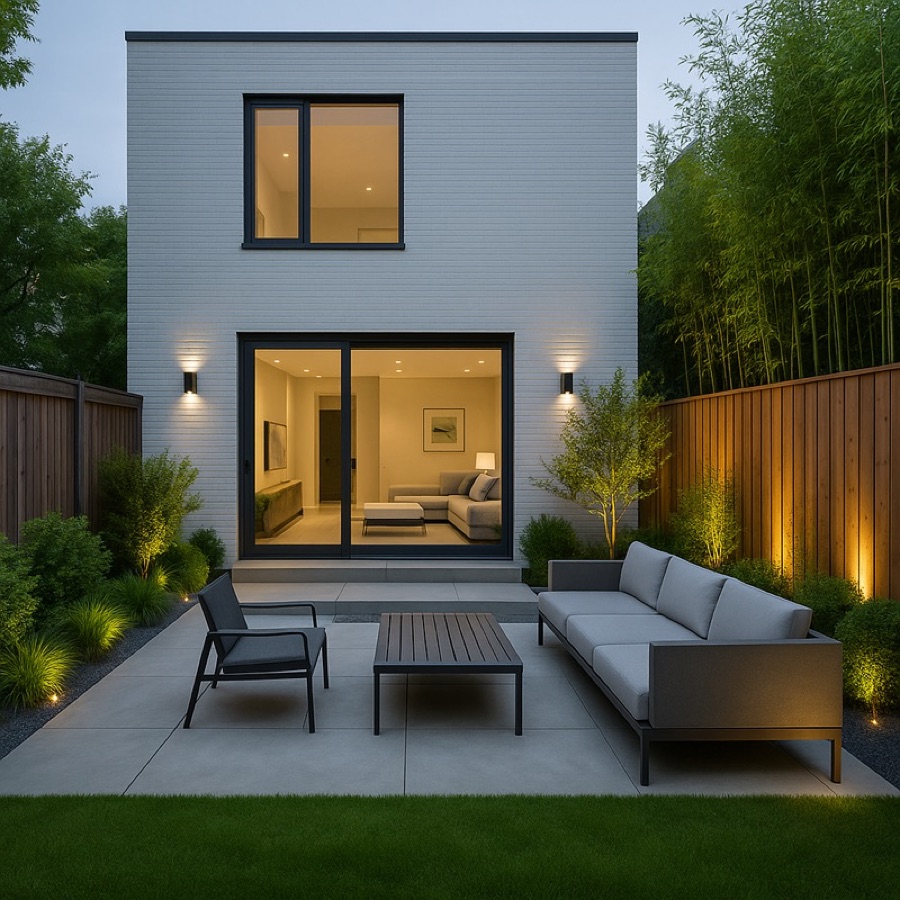
AI landscape design lets you test a direction using a photo of your own outdoor space. That is more useful than browsing generic inspiration because the image begins with your home, layout, and existing context. It still requires judgment: a generated picture is not a construction drawing, and it cannot reveal what is under the ground.
1. Take a photo that shows the space clearly
Capture a broad view with the main surfaces and boundaries visible. Daylight, a level camera, and minimal obstructions help you compare the result with the real yard. If you are planning only a patio, balcony, or front-yard corner, frame that area clearly rather than including unrelated space.
2. Compare styles against the same yard
Try more than one design direction before you decide. iYard includes 15 styles, from modern, Japanese, Mediterranean, tropical, and zen to rustic, classic, contemporary, elegant, minimalist, luxury, industrial, futuristic, kawaii, and kindergarten. A style is a visual starting point, not a rulebook; consider the architecture, climate, maintenance, and how you use the space.
3. Refine the elements that matter
Look beyond the overall mood. Is there enough room for circulation? Does the seating area fit the way you entertain? Are proposed plants and materials appropriate for your location? iYard supports targeted changes to selected landscape elements, so you can explore an adjustment without starting the concept over.
iYard’s difference: it pairs AI-generated landscape concepts with an estimated cost breakdown. You can judge the look and get an early sense of budget in the same workflow.
4. Put a budget beside the image
A concept with stone paving, lighting, planting, and built-in seating suggests several categories of work. Review the estimate item by item, then decide which parts are essential and which could be simplified or delayed. If your site has a slope, drainage issue, access constraint, or hidden utility, expect the real scope to change after inspection.
An AI estimate is best used to prepare questions and compare options—not to replace a local professional quote. Read our cost-estimating guide for a checklist of the assumptions to review.
5. Turn the concept into a conversation
Share your preferred image and a written list of priorities with a landscape professional or contractor. Ask about feasibility, drainage, materials, permits, plant suitability, maintenance, and a detailed quote. Even if the finished project differs from the render, you will have a clearer brief and a better sense of tradeoffs.
See the design. Estimate the cost.
Start with your photo, explore a style, and review a first-pass cost estimate in iYard.
Download iYard ↗