
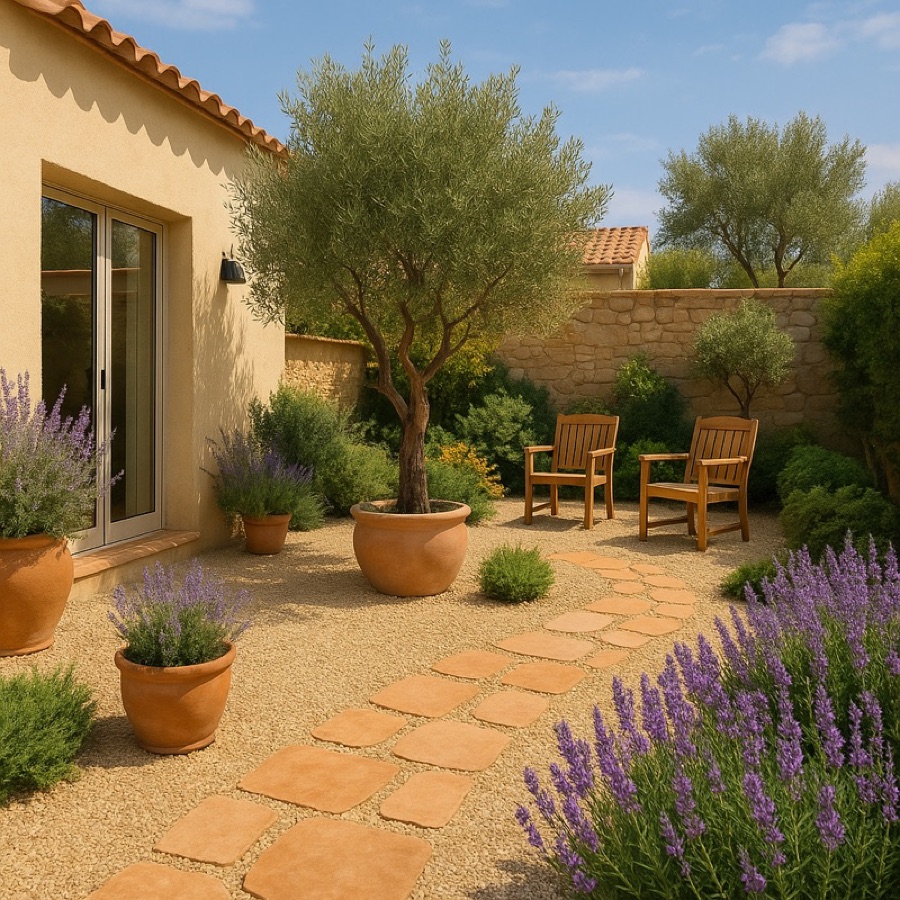
“On a budget” does not mean every choice has to look inexpensive. It means being deliberate about the changes that create the most value for your particular yard. Before shopping for materials, decide what the space needs to do: seating, shade, play, privacy, planting, or easier maintenance.
Keep the parts that already work
An existing patio, path, or fence may be worth refreshing instead of replacing. Cleaning, repairing, painting, and planting around a sound feature can change the feel of the yard without turning it into a full rebuild. The condition matters: a failing surface or drainage problem should be addressed rather than covered up.
Choose one focal improvement
Concentrating effort in one visible zone often produces a clearer result than spreading many small changes across the whole yard. A defined seating area, a new path, or a layered planting border can become the anchor for later work. Try a few styles against a photo of your actual space before committing to materials.
Modern and minimalist concepts can emphasize simple lines and a limited material palette. Rustic and Mediterranean styles may lean on natural textures and planting. No style has a fixed price: area, materials, site conditions, and installation scope matter more than the label.
Compare materials and quantities
A large paved area can dominate an outdoor budget. Compare the size of the area and the material options before you choose a finish. The same goes for plant size: mature specimens make an immediate impact, while smaller plants may require more patience. Consider maintenance as well as initial installation.
Try this: Make two versions of your idea—a “must-have” layout and a “later” layout. Then compare the items that change between them. iYard can help visualize an option and generate an itemized estimate for early planning.
Phase the project
If the full vision is too much for one season, sequence the work. Drainage and structural preparation come before decorative surfaces; major paths and utility routes should be planned before beds are finished. A phased plan keeps later work from undoing earlier work.
- Write down the required fixes and the spaces you use most.
- Sketch or generate a concept that respects the existing layout.
- Review an estimated breakdown, then remove or defer optional items.
- Ask local professionals to confirm the scope, permits, and actual price.
For a closer look at turning a visual concept into a first-pass budget, read how to estimate landscaping costs from a yard photo.
Explore the look and the cost together.
Use iYard to test a backyard design and review an estimated project breakdown before you commit.
Download iYard ↗